Pokémon ex, GX, V, VMAX and VSTAR explained
Updated
Every special Pokémon card type from 2003 to 2025 in one chart: the rule it carries, the Prize cards it gives up, how it evolves, and why the same type can be cheap or valuable.
ex, GX, V, VMAX and VSTAR are special kinds of Pokémon card, each tied to an era of the Pokémon Trading Card Game, and each carries a printed rule that sets what happens when it is Knocked Out. Most give the opponent 2 Prize cards instead of 1: Pokémon-ex, Pokémon-EX, Pokémon-GX, Pokémon V, Pokémon VSTAR and today's Pokémon ex. TAG TEAM, VMAX, V-UNION and Mega Evolution Pokémon ex give up 3. Radiant Pokémon carry no Prize rule; their rule allows only one per deck.
The letters also date the card. Lowercase ex dates from the EX series of 2003 and returned in 2023, uppercase EX belongs to the Black & White and XY years, GX and TAG TEAM to Sun & Moon, and V, VMAX, VSTAR and Radiant to Sword & Shield. Collectors mostly care for another reason: the same Pokémon ex or V is printed at several rarities, and those versions are worth very different amounts.
ex, GX, V, VMAX and VSTAR chart: rules, Prize cards and era
One row per card type, in the order the types appeared. The example card for each row is shown in the grid below; its HP and set date are as the Pokémon TCG API records them. The last column paraphrases the rule text on the card and the official rulebooks.
| Card type | Era (series) | Example card and release | HP | Prize cards | What the rule does |
|---|---|---|---|---|---|
| Pokémon-ex | EX | Chansey ex, Ruby & Sapphire, 2003 | 120 | 2 | Rule printed on the card: when a Pokémon-ex is Knocked Out, the opponent takes 2 Prize cards. |
| Pokémon-EX | Black & White, XY | Mewtwo-EX, Next Destinies, Feb. 8, 2012 | 170 | 2 | Pokémon-EX rule; otherwise plays like any other Pokémon. |
| M Pokémon-EX (Mega) | XY | M Venusaur-EX, XY, Feb. 5, 2014 | 230 | 2 | Evolves from a Pokémon-EX; Mega Evolution rule: your turn ends when it Mega Evolves. |
| Pokémon-GX | Sun & Moon | Lunala-GX, Sun & Moon, Feb. 3, 2017 | 250 | 2 | Same Evolution stages as other Pokémon; one GX attack per game. |
| TAG TEAM | Sun & Moon | Pikachu & Zekrom-GX, Team Up, Feb. 1, 2019 | 240 | 3 | A Basic Pokémon-GX; its GX attack counts toward the one-per-game limit. |
| Pokémon V | Sword & Shield | Snorlax V, Sword & Shield, Feb. 7, 2020 | 220 | 2 | Basic Pokémon with big HP. |
| Pokémon VMAX | Sword & Shield | Snorlax VMAX, Sword & Shield, Feb. 7, 2020 | 340 | 3 | Evolves from a Pokémon V (only one with the same name). |
| Pokémon V-UNION | Sword & Shield | none shown | – | 3 | Four pieces played onto the Bench together from the discard pile, once per game per name. |
| Pokémon VSTAR | Sword & Shield | Arceus VSTAR, Brilliant Stars, Feb. 25, 2022 | 280 | 2 | Evolves from a Pokémon V; one VSTAR Power (Ability or attack) per game. |
| Radiant Pokémon | Sword & Shield | Radiant Greninja, Astral Radiance, May 27, 2022 | 130 | no Prize rule | Only one Radiant Pokémon in a deck. |
| Pokémon ex | Scarlet & Violet | Miraidon ex, Scarlet & Violet, Mar. 31, 2023 | 220 | 2 | Pokémon ex rule; Basic or Evolution cards. |
| Tera Pokémon ex | Scarlet & Violet | Charizard ex, Obsidian Flames, Aug. 11, 2023 | 330 | 2 | Also: no damage from attacks while on the Bench. |
| Mega Evolution Pokémon ex | Mega Evolution | Mega Venusaur ex, Mega Evolution, Sept. 26, 2025 | 380 | 3 | Played like a regular Pokémon ex; Mega Evolving does not end the turn. |
- Pokémon-ex (2003): 2 Prize cards
- Pokémon-EX (2012): 2 Prize cards
- M Pokémon-EX (2014): 2 Prize cards
- Pokémon-GX (2017): 2 Prize cards
- TAG TEAM-GX (2019): 3 Prize cards
- Pokémon V (2020): 2 Prize cards
- Pokémon VMAX (2020): 3 Prize cards
- Pokémon VSTAR (2022): 2 Prize cards
- Radiant (2022): no Prize rule; a deck may hold only one Radiant Pokémon
- Pokémon ex (2023): 2 Prize cards
- Tera ex (2023): 2 Prize cards
- Mega Evolution ex (2025): 3 Prize cards
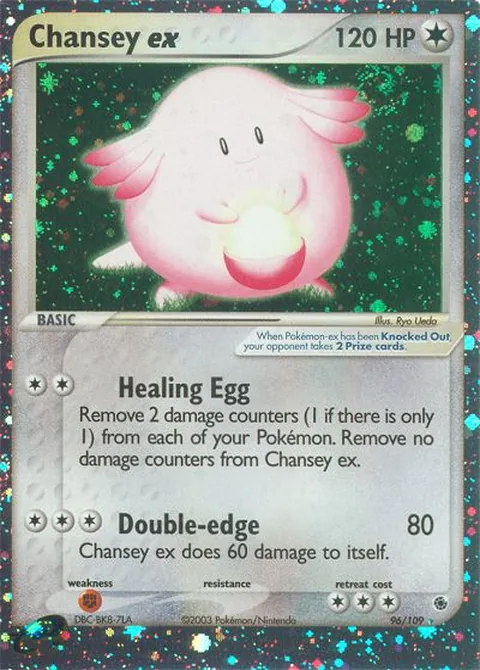 Chansey exPokémon-ex · Ruby & Sapphire, 2003 · 2 Prize cards
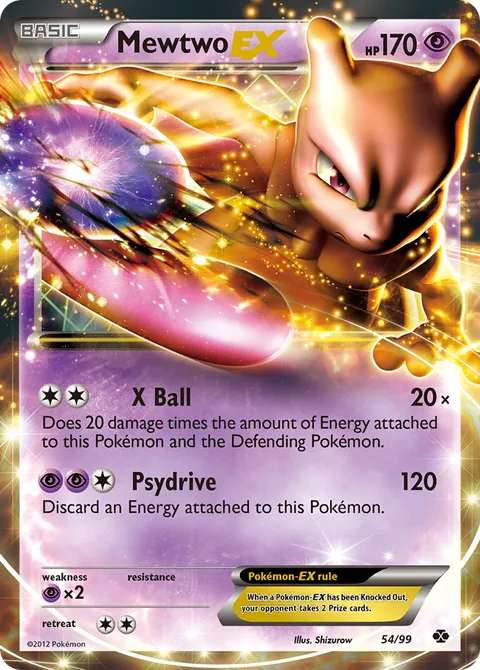 Mewtwo-EXPokémon-EX · Next Destinies, 2012 · 2 Prize cards
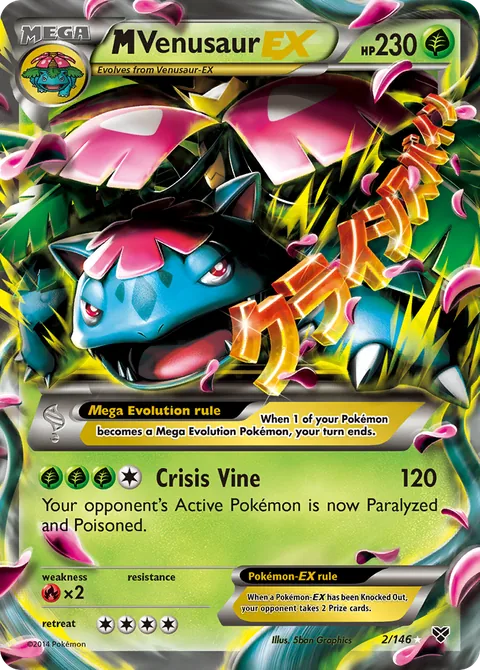 M Venusaur-EXMega Evolution rule ends the turn · XY, 2014 · 2 Prize cards
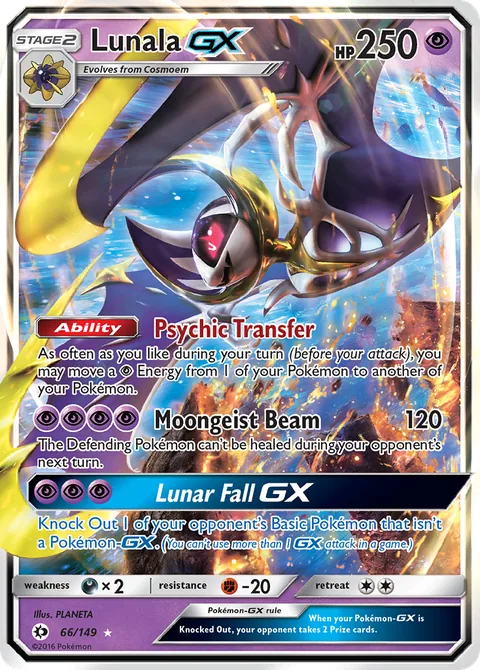 Lunala-GXPokémon-GX, evolves from Cosmoem · Sun & Moon, 2017 · 2 Prize cards
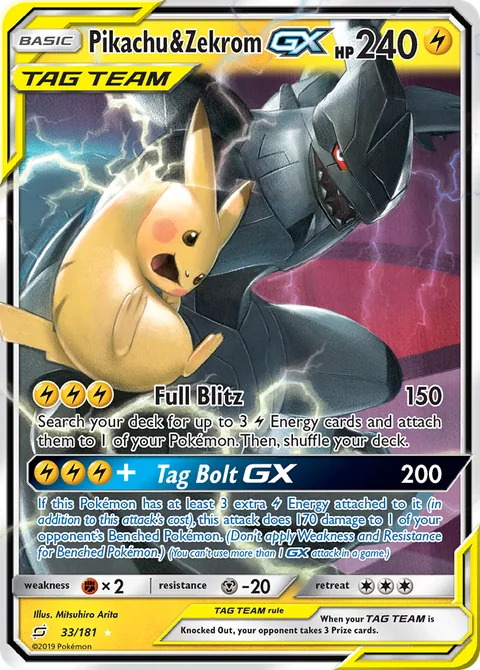 Pikachu & Zekrom-GXTAG TEAM · Team Up, 2019 · 3 Prize cards
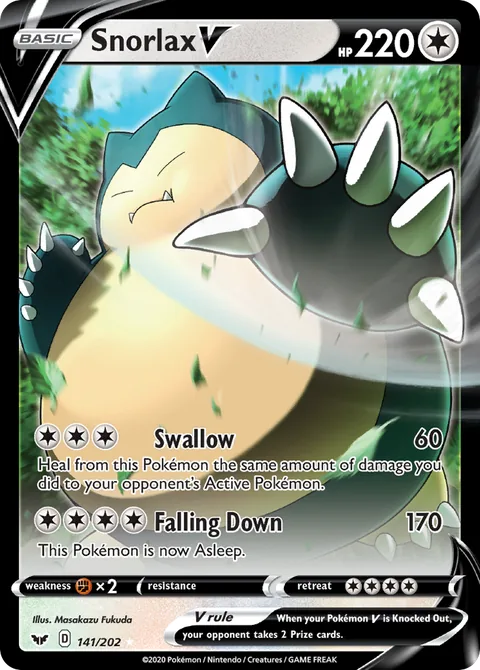 Snorlax VBasic Pokémon V · Sword & Shield, 2020 · 2 Prize cards
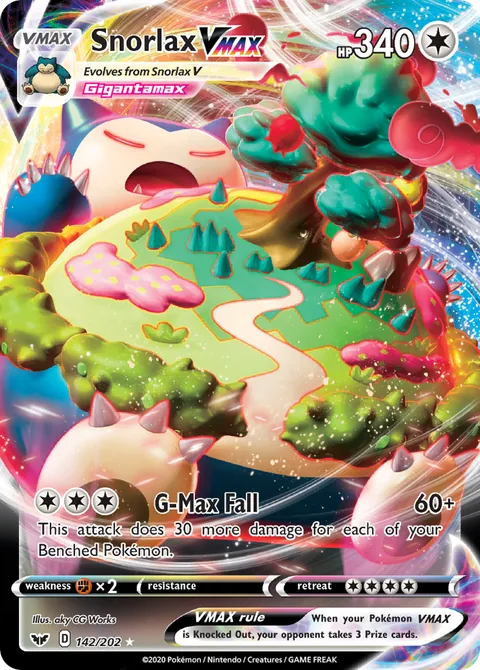 Snorlax VMAXEvolves from Snorlax V · Sword & Shield, 2020 · 3 Prize cards
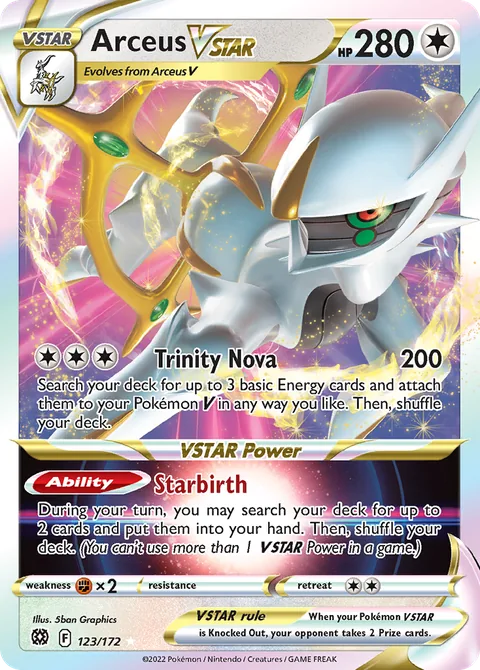 Arceus VSTAREvolves from Arceus V; VSTAR Power Starbirth · Brilliant Stars, 2022 · 2 Prize cards
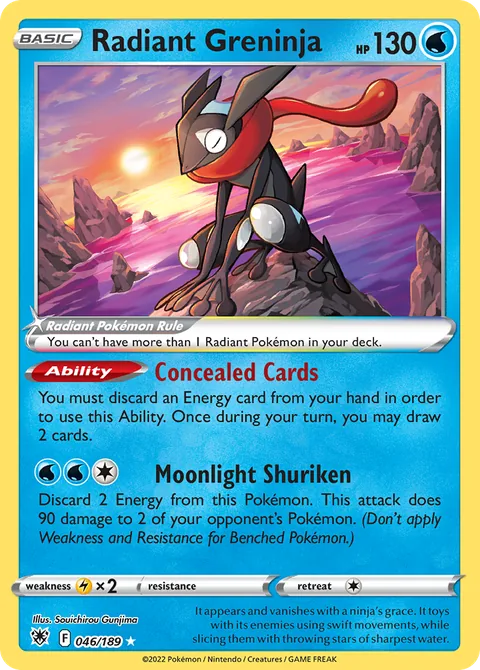 Radiant GreninjaOne Radiant Pokémon per deck · Astral Radiance, 2022
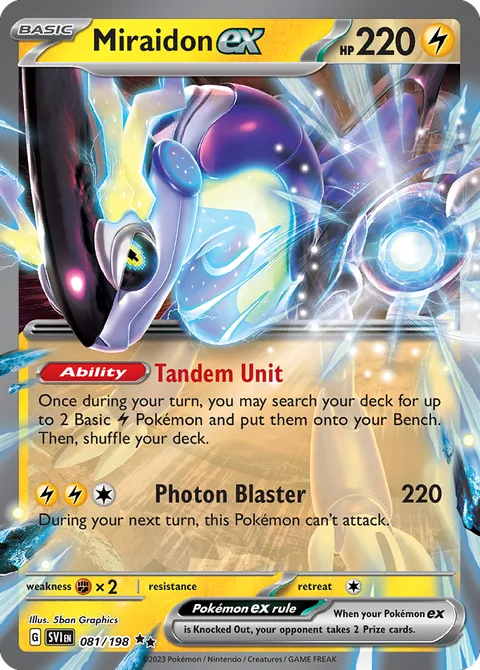 Miraidon exBasic Pokémon ex · Scarlet & Violet, 2023 · 2 Prize cards
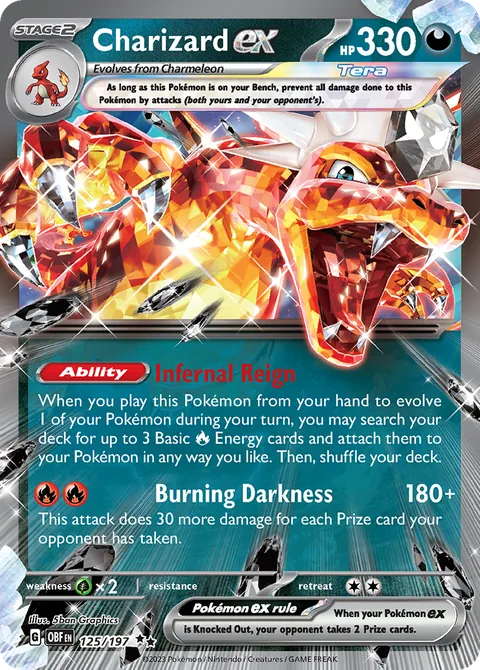 Charizard exTera Pokémon ex, evolves from Charmeleon · Obsidian Flames, 2023 · 2 Prize cards
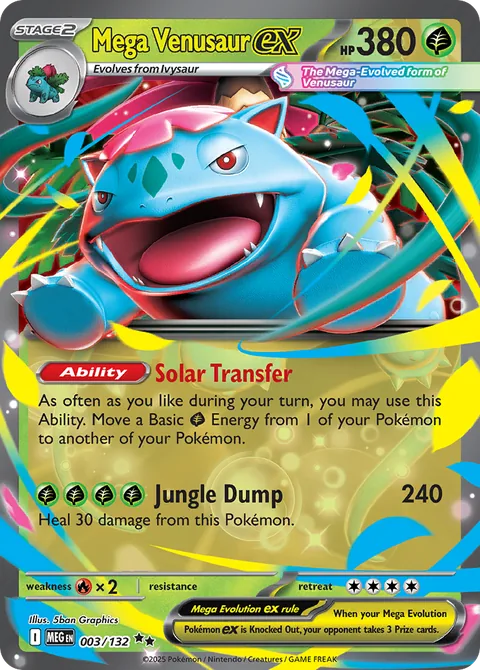 Mega Venusaur exMega Evolution Pokémon ex, evolves from Ivysaur · Mega Evolution, 2025 · 3 Prize cards
ex vs EX: three cards with almost the same name
Three different card types share the letters. Pokémon-ex came first: cards such as Chansey ex from the 2003 Ruby & Sapphire set, with a lowercase “ex” and the rule “When Pokémon-ex has been Knocked Out, your opponent takes 2 Prize cards.” Pokémon-EX, in capitals and hyphenated, is the Black & White and XY type, as on Mewtwo-EX from Next Destinies (February 2012); the rulebook says that apart from the 2 Prize cards they “play just like any other Pokémon card.” Pokémon ex without a hyphen is the Scarlet & Violet type that arrived with the Scarlet & Violet expansion on March 31, 2023, and it still gives up 2 Prize cards.
The set symbol and the collector number settle it; the rule box text names the type in full on every one of them.
Mega Evolution: M Pokémon-EX vs Mega Evolution Pokémon ex
Mega Pokémon have been printed twice, under different rules. In the XY era a Mega was a separate card such as M Venusaur-EX, which evolves from Venusaur-EX and carries two rules: the Pokémon-EX rule (2 Prize cards) and the Mega Evolution rule, “When 1 of your Pokémon becomes a Mega Evolution Pokémon, your turn ends.”
The Mega Evolution expansion of September 26, 2025 brought them back as Mega Evolution Pokémon ex. Mega Venusaur ex is a Stage 2 card that evolves from Ivysaur, like a normal Venusaur, and its rule reads “When your Mega Evolution Pokémon ex is Knocked Out, your opponent takes 3 Prize cards.” Mega Evolving no longer ends the turn. The set itself is covered on the Mega Evolution set page.
GX and TAG TEAM (Sun & Moon)
Pokémon-GX give up 2 Prize cards and use the same Evolution stages as other Pokémon: Lunala-GX from the 2017 Sun & Moon set is a Stage 2 that evolves from Cosmoem. Each has a GX attack, and the rulebook allows only one GX attack per player in an entire game.
A TAG TEAM is a special kind of Basic Pokémon-GX, such as Pikachu & Zekrom-GX, which puts two Pokémon on one card. Its rule reads “When your TAG TEAM is Knocked Out, your opponent takes 3 Prize cards.” The Team Up expansion that introduced the mechanic on February 1, 2019 had six of them.
V, VMAX, VSTAR and V-UNION (Sword & Shield)
- Pokémon V are Basic Pokémon with big HP and strong attacks, worth 2 Prize cards. The first Sword & Shield expansion (February 7, 2020) had 17 standard Pokémon V and 12 full-art Pokémon V.
- Pokémon VMAX evolve from Pokémon V and show Dynamax or Gigantamax Pokémon; the rulebook adds that a VMAX evolves only from the V of the same name. A VMAX gives up 3 Prize cards. That first set had four, among them Snorlax VMAX in its Gigantamax form.
- Pokémon VSTAR arrived with Brilliant Stars on February 25, 2022. They also evolve from Pokémon V and can only come into play that way. Each has a VSTAR Power, an Ability or an attack, and a player may use only one VSTAR Power per game. A VSTAR gives up 2 Prize cards, the same as a V.
- Pokémon V-UNION come in four pieces that are played onto the Bench together from the discard pile, once per game for each name. They are neither Basic nor Evolution cards and give up 3 Prize cards.
Sword & Shield V and VMAX are also the cards that got alternate art versions; the full list is on alt art Pokémon cards.
Radiant Pokémon
Radiant Pokémon came with Astral Radiance on May 27, 2022, which held three of them. The Pokémon Company describes them as Shiny Pokémon in etched artwork that tend to have a strong Ability or attack. Their only rule is the deck limit: “You can't have more than 1 Radiant Pokémon in your deck.” Radiant Greninja, for example, is a Basic Pokémon with 130 HP and no Prize rule.
Pokémon ex and Tera Pokémon ex (Scarlet & Violet)
The Scarlet & Violet expansion brought back an updated Pokémon ex and introduced Tera Pokémon ex. Both carry the Pokémon ex rule (2 Prize cards). A Tera card adds a second rule: as long as it is on your Bench, all damage done to it by attacks is prevented. Obsidian Flames (August 11, 2023) printed Tera cards of a different type than usual, led by a Darkness-type Charizard ex.
What a rule box is
The official Advanced Player's Rulebook says that Pokémon with “●● Rule” written on the card have a Rule Box, naming Pokémon ex and Pokémon V as examples. Bulbapedia notes that rule boxes first appeared on Pokémon-EX in Next Destinies and that the term began to matter for gameplay in Battle Styles, when cards started to refer to “Pokémon with a Rule Box.”
Card type vs rarity: what collectors pay for
The card type is a game mechanic; the rarity is how the card was printed. One Pokémon ex can exist in several printings. The Scarlet & Violet launch set held 12 double rare Pokémon ex, 12 ultra rare Pokémon ex, 10 special illustration rare Pokémon and Supporter cards and six gold hyper rares. The API files the regular-version ex shown above as Double Rare, while every Sword & Shield example carries its type in the rarity name (Rare Holo V, Rare Holo VMAX, Rare Holo VSTAR).
Prices follow the printing, not the type: compare Charizard VMAX and VSTAR versions on Charizard cards, the gold Galarian Gallery VSTARs on Crown Zenith, and the gold ex on gold Pokémon cards. Graded copies add one more layer; PSA 9 vs PSA 10 explains the gap.
Questions collectors ask
What is the difference between V, VMAX and VSTAR?
A Pokémon V is a Basic Pokémon worth 2 Prize cards. A VMAX evolves from a V and is worth 3. A VSTAR also evolves from a V, is worth 2 and has one VSTAR Power that can be used once per game.
Are EX and ex the same?
No. Pokémon-ex (lowercase, 2003), Pokémon-EX (capitals, Black & White and XY) and Pokémon ex (Scarlet & Violet, 2023 on) are three types. All three give up 2 Prize cards; the Mega versions differ (2 for M Pokémon-EX, 3 for Mega Evolution Pokémon ex).
What does GX mean on a Pokémon card?
It marks a Pokémon-GX from the Sun & Moon era: a card worth 2 Prize cards with a GX attack that can be used once per game. A TAG TEAM is a GX card too, worth 3.
Is a VMAX or ex card rare?
Not by itself. The type tells you how the card plays; the rarity symbol and number tell you how scarce the printing is. Check the exact number before comparing prices; the method is in where to check sold prices.
Checklist: identify a card's type
- ☐ Read the letters after the name: ex, -EX, -GX, V, VMAX or VSTAR; a TAG TEAM banner; “Radiant” or “Mega” before the name.
- ☐ Read the rule box: it names the type and the Prize cards it gives up.
- ☐ Check “Evolves from”: VMAX and VSTAR evolve from a V, M Pokémon-EX from a Pokémon-EX, Mega Venusaur ex from Ivysaur, as a normal Venusaur would.
- ☐ Use the set symbol and collector number to date the card and find its rarity.
- ☐ For value, look up sold prices for that exact number and grade.
Sources
- Pokémon TCG API — single-card records for the 12 cards shown (name, HP, rule text, evolves-from, number, rarity, set and release date, images; read Nov. 17, 2026)
- Pokémon.com — Pokémon Trading Card Game Rules (2021 rulebook): appendices on Pokémon V, VMAX, V-UNION, TAG TEAM, Pokémon-GX and Pokémon-EX
- Pokémon Card Game Advanced Player's Rulebook, Ver. 3.4 (2025), Pokémon TCG Asia: Rule Box, Mega Evolution Pokémon ex and Radiant Pokémon rules
- Pokémon.com — Pokémon VSTAR in Sword & Shield—Brilliant Stars (Feb. 25, 2022): evolving from Pokémon V, one VSTAR Power per game, 2 Prize cards
- The Pokémon Company International media alerts: Sun & Moon—Team Up with TAG TEAM Pokémon-GX (Feb. 1, 2019) and the first Sword & Shield expansion with Pokémon V and VMAX (Feb. 7, 2020)
- Pokémon Press Site — media alert: Sword & Shield—Astral Radiance to introduce Radiant Pokémon (Mar. 8, 2022)
- The Pokémon Company press release: Scarlet & Violet expansion available (Mar. 31, 2023): Pokémon ex, Tera Pokémon ex, rarity counts
- Bulbapedia (secondary) — “Rule Box (TCG)” and “Pokémon ex (TCG)”
Sources checked October 2026.