Pokémon card artists
Who draws Pokémon cards, how each artist works, and which cards carry their names.
Pokémon cards name the artist who drew them, and many collectors build their binders around those names rather than around a set or a Pokémon. This hub lists the illustrators collectors search for most, how many cards each is credited with in the Pokémon TCG API, when they started on the card game, how sources describe their style or method, and examples of their cards. Card facts come from the API's artist field and single-card records, read October 28, 2026; biographies and style notes come only from the interviews, profiles and reference pages listed under Sources. Individual artist pages will follow and are linked from this page as they go up.
Who illustrates Pokémon cards
There is no single house style. The card game has used freelance illustrators, game designers and craft artists side by side since the late 1990s, and the method behind a card can be anything from watercolor to a photographed sculpture:
- Painters. Kagemaru Himeno works in watercolor; Miki Tanaka uses gouache on watercolor paper and only traditional media, according to a 2025 UNIQLO UT feature; Mitsuhiro Arita's early cards mixed watercolor or pastel with firm outlines.
- Digital illustrators. AKIRA EGAWA paints mainly in Photoshop; Shinji Kanda works mostly digitally but has also used colored pencil on shrink plastic and a scan of crumpled aluminum foil.
- Sculptors and crafters. Yuka Morii sculpts Pokémon in clay and photographs the models; Asako Ito crochets amigurumi dolls and makes the backgrounds from felt and other materials.
- The game's own designers. Ken Sugimori drew the original artwork for the Pokémon games, and Bulbapedia notes that most of his card credits reuse that game artwork. Atsuko Nishida, one of the designers of Pikachu, has illustrated cards since the early Japanese promos.
The Pokémon TCG API stores the credited illustrator of each card in an artist field, which is how the counts below were made. Names keep their own capitalization and punctuation, so the spelling matters when you search: the API writes AKIRA EGAWA in capitals, sowsow in lower case and Shibuzoh. with a full stop.
Twelve artists collectors look for
The table covers the illustrators with the most search interest plus the founding artists of the Base Set era. “Cards in the API” is the number of English-language cards whose artist field names that illustrator, including reprints and promos; it is a guide, not an official total. Other sources count differently: CGC put Yuka Morii at 209 cards in 2024 and Bulbapedia lists 216, against 207 in the API. Rarity names and numbers are the API's.
| Artist | Cards in the API | On the TCG since | Style or method | Example cards |
|---|---|---|---|---|
| Mitsuhiro Arita | 727 | The game's prototype stage, before the first video games came out | Watercolor or pastel with firm outlines early on; later a looser, brightly colored style with strong light and shadow and unusual camera angles | Charizard 4/102 and Pikachu 58/102 (Base Set, 1999) |
| Ken Sugimori | 1,116 | Base Set (1999): the API credits him with 44 of its cards | Drew the original artwork for the Pokémon games; early work in lightly shaded watercolor | Blastoise 2/102 and Mewtwo 10/102 (Base Set); Dark Charizard 4/82 (Team Rocket); Blaine's Charizard 2/132 (Gym Challenge) |
| Kagemaru Himeno | 657 | Jungle (released in Japan in 1997) | Watercolor: vivid foregrounds, softer backgrounds, often white flecks of light | Flareon 3/64, Jolteon 4/64 and Vaporeon 12/64 (Jungle); Vileplume-GX 4/236 (Cosmic Eclipse) |
| Atsuko Nishida | 409 | Early Japanese promos; first card in a regular set in Team Rocket | Airbrush, with a soft palette and Pokémon at home in their surroundings | Espeon 1/75 (Neo Discovery); Crobat 147/144 and Kabutops 150/144 (Skyridge) |
| Naoki Saito | 272 | HeartGold & SoulSilver | Vibrant, surreal scenes mixing organic and geometric shapes; best known for Trainer cards | Lillie 151/156 (Ultra Prism); Marnie SWSH121 (promo); Mew V 251/264 (Fusion Strike) |
| Tomokazu Komiya | 251 | Japanese Expansion Sheet 1; first English cards in Neo Genesis | Deliberately deformed, loosely colored figures with exaggerated faces and bodies | Frigibax, Arctibax and Baxcalibur 208–210/193 (Paldea Evolved); Galarian Slowking V 179/198 (Chilling Reign) |
| Yuka Morii | 207 | 2000; first English cards in Neo Discovery (2001) | Sculpts the Pokémon in clay and photographs the model in a set or a real location | Corsola 37/75 (Neo Discovery); Venusaur & Snivy-GX SM229 (promo); Drapion V GG49/70 (Crown Zenith) |
| Miki Tanaka | 195 | Fossil (1997) | Gouache on watercolor paper, traditional media only; flat but expressive | Dark Magneton 11/82 (Team Rocket); Slowpoke & Psyduck-GX 218/236 (Unified Minds); Spidops ex 243/198 (Scarlet & Violet) |
| sowsow | 109 | Forbidden Light (2018) | No style description in the sources used here | Gengar VMAX 271/264 (Fusion Strike); Espeon V 180/203 (Evolving Skies); Charmander 109/091 (Paldean Fates) |
| AKIRA EGAWA | 87 | 2019, with Riolu in Unified Minds | Painted mainly in Photoshop, with detailed textures meant to look “cool” | Charizard ex 223/197 (Obsidian Flames) and 234/091 (Paldean Fates); Arceus VSTAR GG70/70 (Crown Zenith) |
| Asako Ito | 37 | Sun & Moon, with Poliwag | Crochets amigurumi dolls of the Pokémon and builds backgrounds from felt and other materials | Snorlax 109/159 and Altaria GG19/70 (Crown Zenith); Audino 151/086 (Black Bolt) |
| Shinji Kanda | 24 | Brilliant Stars (2022), with Magmar | Mostly digital, with experiments such as colored pencil on shrink plastic and scanned aluminum foil | Giratina V 186/196 (Lost Origin); Magikarp 203/193 (Paldea Evolved); Seismitoad 105/086 (Black Bolt) |
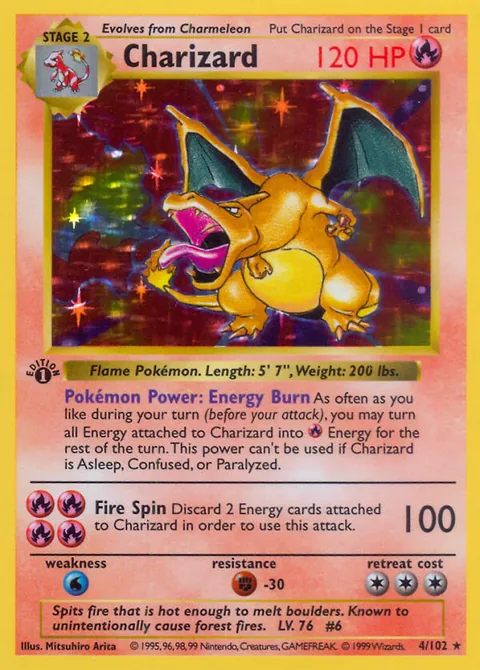 CharizardMitsuhiro Arita · Base Set, 1999
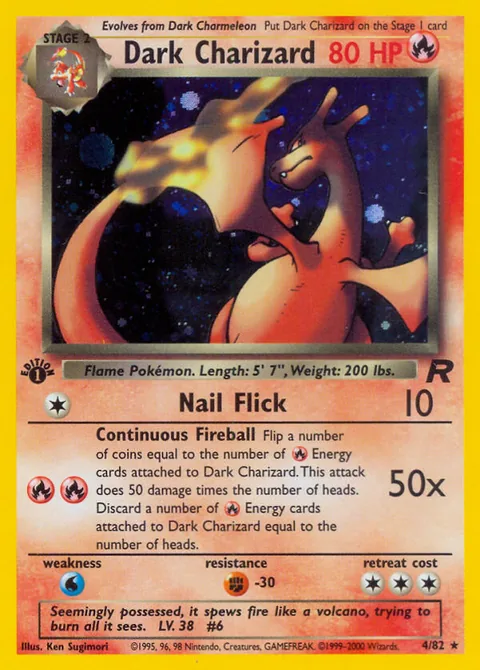 Dark CharizardKen Sugimori · Team Rocket, 2000
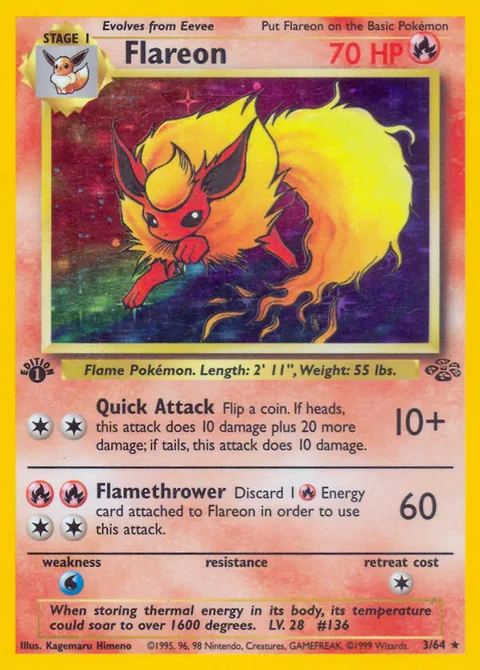 FlareonKagemaru Himeno · Jungle, 1999
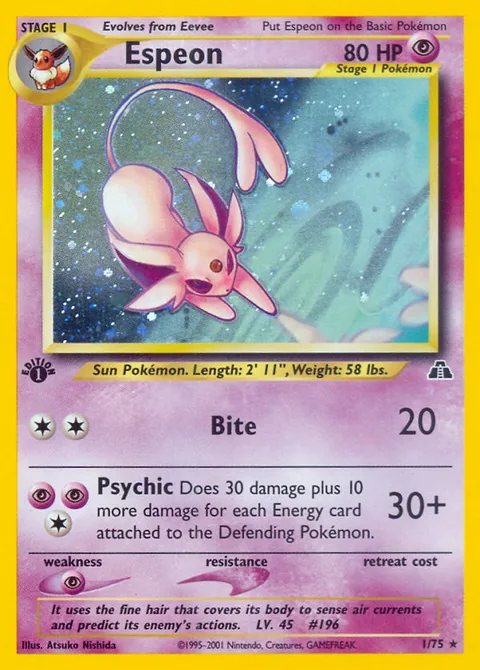 EspeonAtsuko Nishida · Neo Discovery, 2001
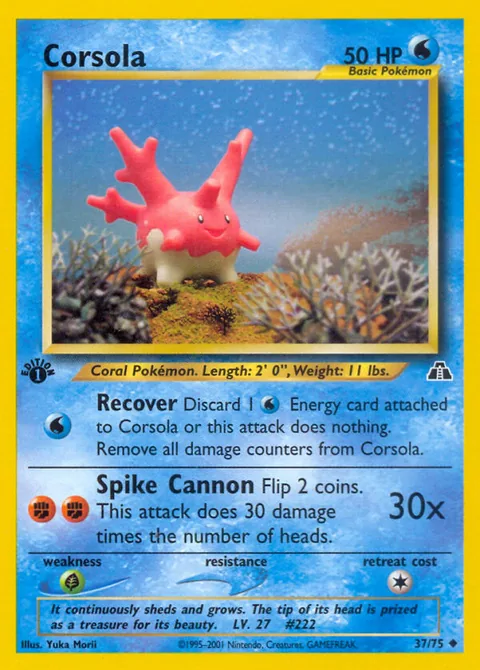 CorsolaYuka Morii · Neo Discovery, 2001 (a photographed clay model)
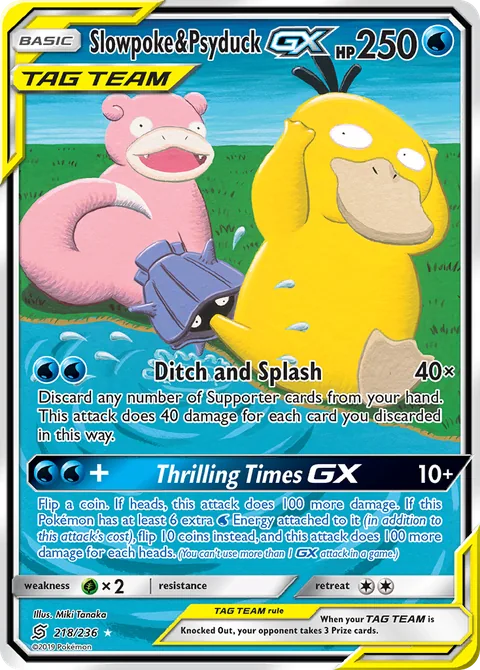 Slowpoke & Psyduck-GXMiki Tanaka · Unified Minds, 2019
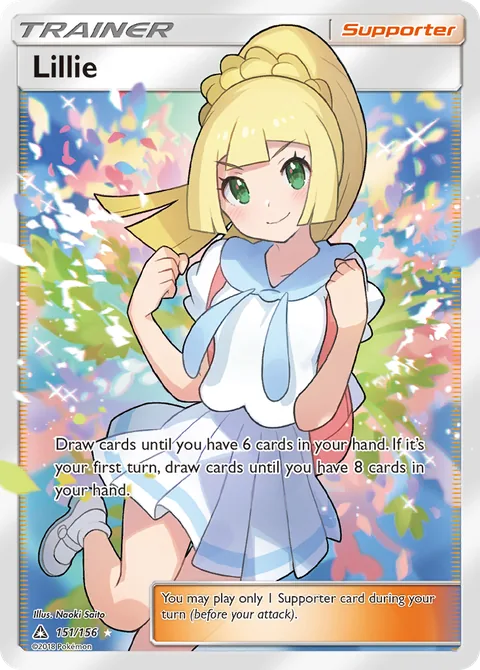 LillieNaoki Saito · Ultra Prism, 2018
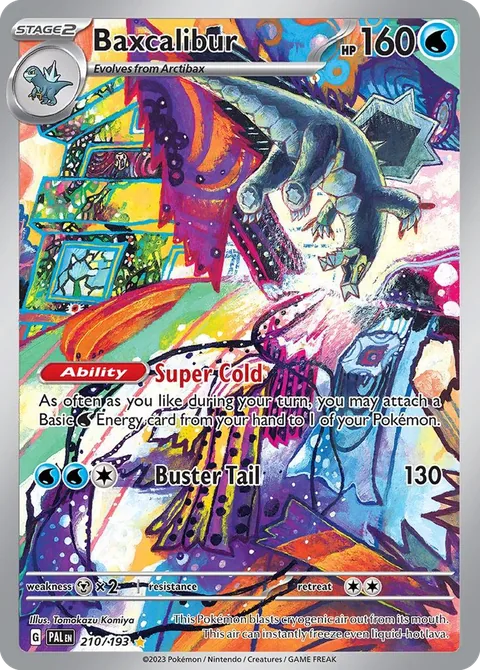 BaxcaliburTomokazu Komiya · Paldea Evolved, 2023
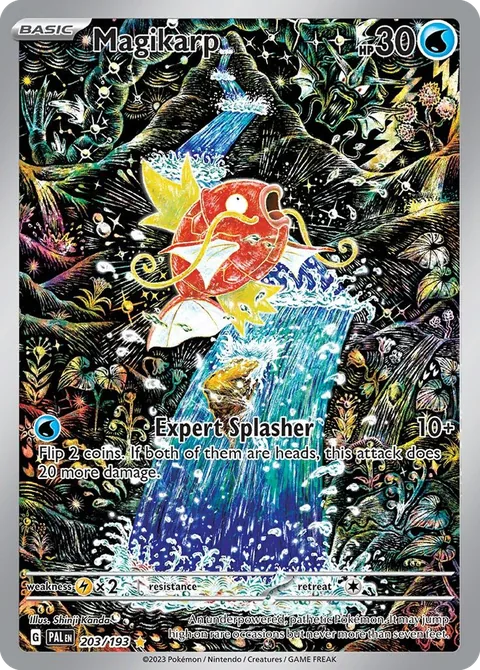 MagikarpShinji Kanda · Paldea Evolved, 2023
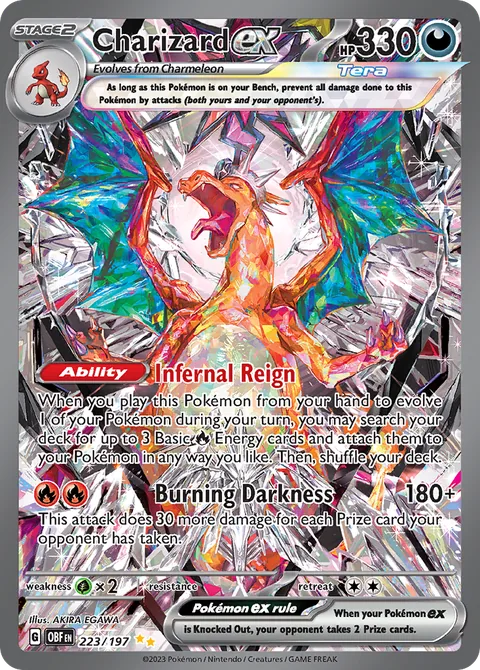 Charizard exAKIRA EGAWA · Obsidian Flames, 2023
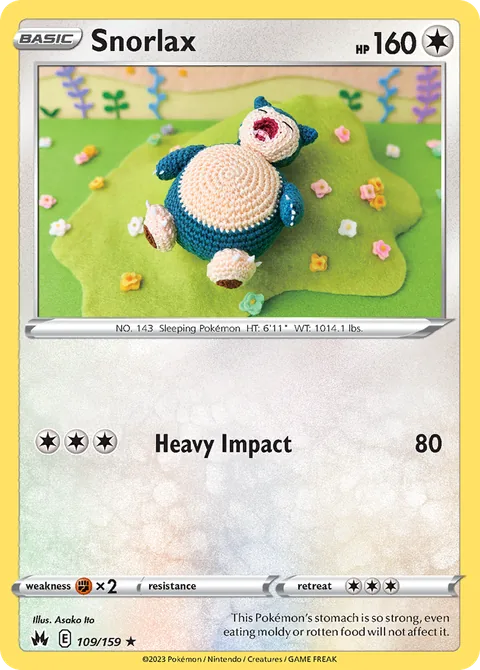 SnorlaxAsako Ito · Crown Zenith, 2023 (a crocheted figure)
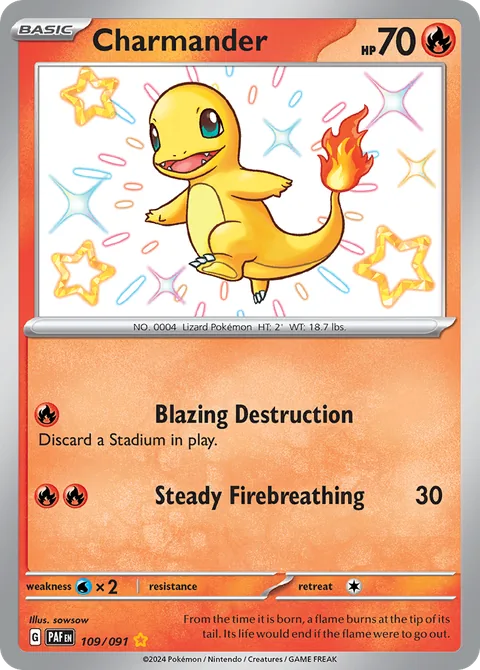 Charmandersowsow · Paldean Fates, 2024
- Ken Sugimori — 1,116
- Mitsuhiro Arita — 727
- Kagemaru Himeno — 657
- Atsuko Nishida — 409
- Naoki Saito — 272
- Tomokazu Komiya — 251
- Yuka Morii — 207
- Miki Tanaka — 195
- sowsow — 109
- AKIRA EGAWA — 87
- Asako Ito — 37
- Shinji Kanda — 24
The artists in brief
Mitsuhiro Arita
Arita was born in Fukuoka in 1970 and is self-taught. Bulbapedia says he worked on the card game from its prototype stage, was brought in by Keiji Kinebuchi and designed the symbols for the first six Energy types; he has said the Base Set Pikachu and Charizard had a big effect on his career. The API credits him with both, Charizard 4/102 and Pikachu 58/102, and with the reprints of that Charizard listed on the Charizard cards page. Outside Pokémon, CGC notes his work on Final Fantasy XI and Marvel comics.
Ken Sugimori
Sugimori drew the original artwork for the Pokémon games, and Bulbapedia credits him with more Pokémon cards than any other artist, most of them reusing that game art. In the API his name appears on 1,116 cards, the most of any artist checked for this page. The API credits him with 44 cards of the 1999 Base Set alone, Blastoise 2/102 and Mewtwo 10/102 among them, and later with Dark Charizard 4/82 from Team Rocket and Blaine's Charizard 2/132 from Gym Challenge.
Kagemaru Himeno
CGC's 2026 profile says Himeno started in manga illustration in 1994, has drawn for the card game since Jungle, released in Japan in 1997, and has illustrated more than 600 cards. She paints in watercolor, with bright foregrounds, softer backgrounds and white flecks that often suggest light or floating spores. Her Jungle Flareon, Jolteon and Vaporeon are among her earliest cards, and her Cosmic Eclipse Vileplume-GX shows the later, more detailed style, with Erika asleep beside her Pokémon.
Atsuko Nishida
Nishida is one of the designers behind Pikachu and many early Pokémon. On cards, Bulbapedia describes an airbrush technique with a soft palette. The API lists 409 cards by her, including the Neo Discovery Espeon 1/75 and two Skyridge secret rares, Crobat 147/144 and Kabutops 150/144.
Naoki Saito
A Tama Art University graduate, Saito began on the card game with HeartGold & SoulSilver and is known above all for Trainer art, according to CGC, which calls his style vibrant and surreal. CGC singles out the Ultra Prism Lillie 151/156, the Marnie promo SWSH121 and the Fusion Strike Mew V. Recent API credits include the Hilda Special Illustration Rare 171/086 in White Flare and Lillie's Clefairy ex 280/217 in Ascended Heroes.
Tomokazu Komiya
Bulbapedia describes Komiya's figures as deliberately deformed and loosely colored, with exaggerated faces and proportions and strong color contrast against the background. His first English cards were in Neo Genesis. His Illustration Rares include the Frigibax, Arctibax and Baxcalibur trio in Paldea Evolved and Karrablast 94/086 in Black Bolt. He also drew Sunflora and Smeargle artwork for the 2023 Pokémon x Van Gogh Museum collaboration.
Yuka Morii
Morii is an illustrator, character designer and clay modeler who teaches part-time at the Kuwasawa Design Institute. Instead of drawing, she sculpts each Pokémon in clay and photographs it in an arranged scene or a real location. Her first English cards were Caterpie, Kabuto, Corsola and Omanyte in Neo Discovery (2001); CGC also points to the Venusaur & Snivy-GX promo and the POP Series 2 Pikachu.
Miki Tanaka
UNIQLO's 2025 feature says Tanaka was born in Tokyo, first painted custom designs on fans and hats for a dance-prop shop in Asakusa, and has worked on the card game since Fossil. She paints in gouache, one decisive pass per piece. The API credits her with 195 cards, among them the Team Rocket Dark Magneton and the Scarlet & Violet Spidops ex Special Illustration Rare 243/198.
sowsow
sowsow, born in 1988, has also drawn for Pokémon Sleep and the One Piece card game. The first cards came in Forbidden Light (2018); Bulbapedia also credits sowsow with Snorlax and Eevee artwork for the Van Gogh collaboration. Card credits include the rainbow Gengar VMAX 271/264, a run of Paldean Fates shiny cards and the Mawile Illustration Rare 246/217 in Ascended Heroes.
AKIRA EGAWA
Egawa began on the card game in 2019 with Riolu in Unified Minds, paints mainly in Photoshop and, per Bulbapedia, aims for detailed textures that make the subject look cool. She drew the booster-pack art for the international Battle Styles, Chilling Reign, Evolving Skies and Fusion Strike releases and judged the 2022 illustration contest. Her API credits include the Charizard ex Special Illustration Rares in Obsidian Flames and Paldean Fates, the four VSTAR secret rares GG67–GG70 that close Crown Zenith's Galarian Gallery, and Mega Darkrai ex 116/084 in Pitch Black.
Asako Ito
Ito studied oil painting and taught herself to knit at university. Her cards show crocheted amigurumi dolls on backgrounds she makes from felt and other materials: these are the crochet Pokémon cards. Her first card was Poliwag in Sun & Moon; the API lists 37 cards, including the Crown Zenith Snorlax, the Audino Illustration Rare in Black Bolt and Pikachu 27/128 in 30th Celebration.
Shinji Kanda
Kanda was born in Kyoto Prefecture in 1986. His first card was Magmar in Brilliant Stars, made by coloring plastic with pencils and shrinking it with heat; for a Scarlet & Violet promo Magneton he scanned crumpled foil. Only 24 cards carry his name in the API, but they include the Lost Origin Giratina V 186/196, the Paldea Evolved Magikarp 203/193 and the Seismitoad Illustration Rare 105/086, the card with the highest PSA 10 price on the Black Bolt page.
More illustrators collectors search for
These artists also draw steady search interest. The counts are from the same API search; they are listed here without style notes because none were checked for this page.
| Artist | Cards in the API |
|---|---|
| Kouki Saitou | 653 |
| Midori Harada | 353 |
| Akira Komayama | 243 |
| Keiji Kinebuchi | 213 |
| kawayoo | 211 |
| Saya Tsuruta | 125 |
| Shibuzoh. | 104 |
| Oswaldo KATO | 89 |
| Mina Nakai | 82 |
| HYOGONOSUKE | 80 |
| Teeziro | 74 |
| Yuu Nishida | 67 |
| OKACHEKE | 65 |
| Ryota Murayama | 57 |
| Narumi Sato | 47 |
| Tetsu Kayama | 21 |
Ryota Murayama, for example, drew the Brilliant Stars Charizard V 154/172, the alternate full art covered on the Charizard cards page.
Artist pages
No single-artist pages are published yet. As each one goes up it appears here, and the artist's name in the tables on this page becomes a link to it.
How to find every card by one artist
- Use the name exactly as it is credited. Capitals, lower case and punctuation vary (AKIRA EGAWA, sowsow, Shibuzoh.), and a search on a different spelling can miss cards.
- Search a card database by artist. The Pokémon TCG API's artist field can be searched directly; community databases such as Bulbapedia keep artist card lists that include Japanese-only cards and the Pocket game.
- Expect the totals to differ. Reprints, promos, trainer kits and Japanese-only cards are counted differently from one source to the next, so a total is a guide.
- Check the exact card before you compare prices. Many artists have several versions of a card in one set (regular, full art, rainbow or illustration rare), and only the number tells them apart. The method is in where to check sold prices.
Questions collectors ask
Who drew the Base Set Charizard?
Mitsuhiro Arita. The API credits him with Charizard 4/102 from the 1999 Base Set and with the later reprints of the same artwork.
Who has illustrated the most Pokémon cards?
Ken Sugimori, by Bulbapedia's count and in the API, where 1,116 cards name him; most reuse artwork from the video games. Among artists who draw new card art, Mitsuhiro Arita (727 cards in the API), Kagemaru Himeno (657) and Kouki Saitou (653) have the longest lists of those checked here.
Who makes the clay and crochet Pokémon cards?
The clay models are Yuka Morii's; the crocheted dolls are Asako Ito's. Both photograph a physical object rather than draw the Pokémon.
Who designed Pikachu?
Atsuko Nishida is one of Pikachu's designers, and she has also illustrated more than 400 cards. The Base Set Pikachu card itself was drawn by Mitsuhiro Arita.
Are cards by a famous artist worth more?
Not automatically. Prices follow the specific card, its rarity and its condition; an artist's name is one reason collectors want a card, not a price. For values, see the most expensive Pokémon cards and the set pages.
Sources
- Pokémon TCG API — card search by the artist field and single-card records for the cards shown (artist, set, number, rarity, images; read Oct. 28, 2026)
- CGC — Artist Showcase columns: Yuka Morii (June 12, 2024), Naoki Saito (Dec. 5, 2024), Kagemaru Himeno (Feb. 12, 2026); and the Mitsuhiro Arita SDCC witnessing notice (July 23, 2024)
- UNIQLO UT — “Illustrators’ Passion in a Single Pokémon Card” (Miki Tanaka and Keiji Yano, Aug. 11, 2025)
- Bulbapedia — illustrator pages for Mitsuhiro Arita, Ken Sugimori, Atsuko Nishida, Tomokazu Komiya, Yuka Morii, sowsow, Akira Egawa, Asako Ito and Shinji Kanda (secondary source; read Oct. 28, 2026)
Sources checked October 2026.